
Understanding tarot as a therapeutic tool
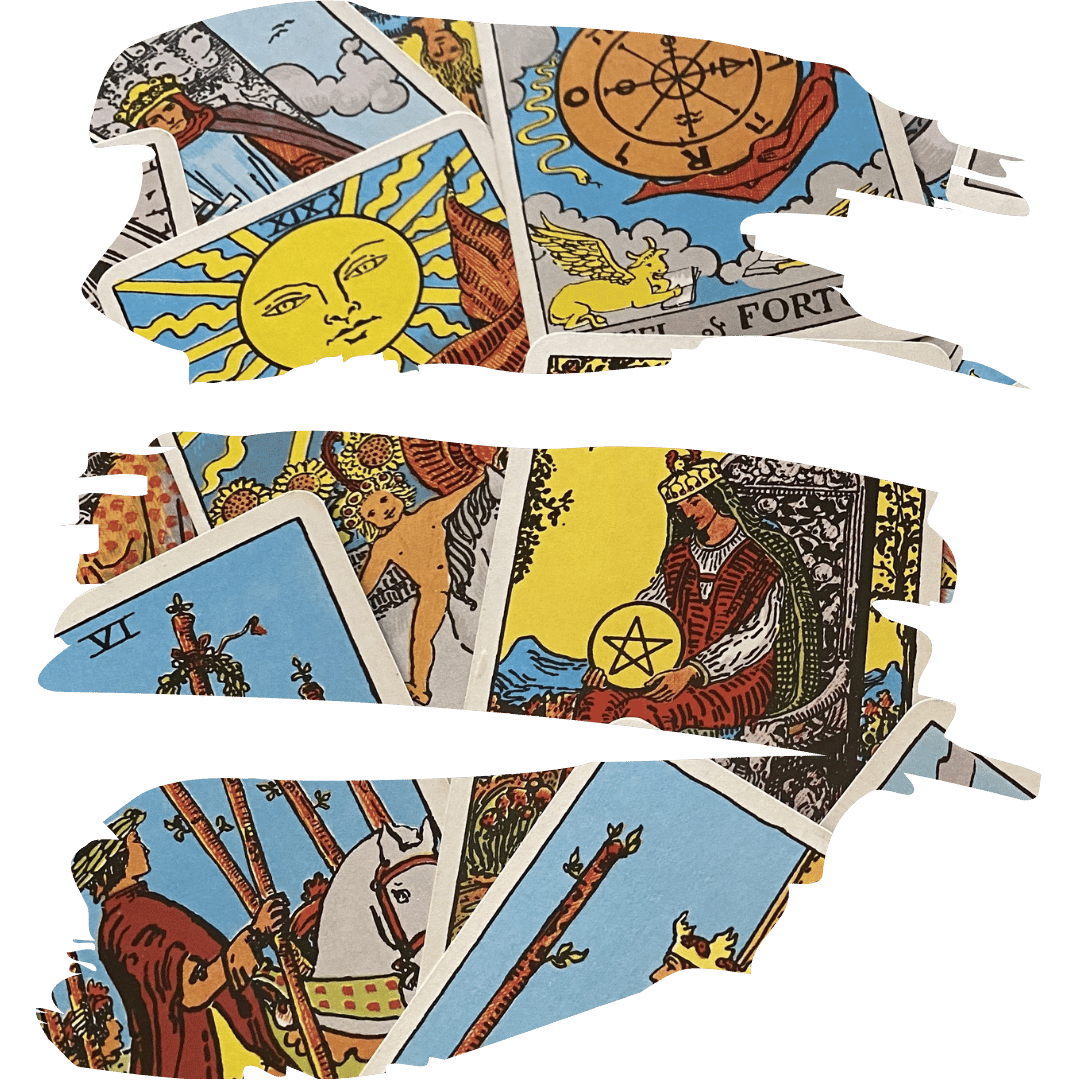
“[Tarot cards] are sort of archetypal ideas, of a differentiated nature, which mingle with the ordinary constituents of the flow of the unconscious, and therefore it is applicable for an intuitive method that has the purpose of understanding the flow of life . . . lending itself to the reading of the conditions of the present moment…. You see, man always felt the need of finding an access through the unconscious to the meaning of an actual condition, because there is a sort of correspondence or a likeness between the prevailing condition and the condition of the collective unconscious.”
– Carl Jung, March 1933 Seminar
What is tarot counselling?
Tarot counselling combines therapeutic conversation with the symbolic and reflective use of tarot cards.
Rather than predicting the future or telling you what will happen, tarot is used as a tool for self-exploration, insight, and meaning-making. The cards often act as mirrors, helping us notice patterns, emotions, assumptions, hopes, fears, and possibilities that may otherwise remain outside of our regular awareness.
Together, we explore the images, themes, and questions that emerge from the cards and connect them to your lived experience. The goal is not necessarily to find the “right” answer (although that can definitely happen), but rather to deepen your understanding of yourself and the choices in front of you.
Tarot counselling can help with:
- Accessing chronic pain in therapy without needing to jump right into “where do you feel that in your body”
- Creating ritual at the beginning or end of session (for those who have anxiety about what to talk about)
- When therapy feels stuck
- Grounding and centering
- Relationship concerns
- Career decisions
- Identity exploration
- Personal growth
- Grief and loss
- Spiritual exploration
- Creative blocks
- Burnout and life direction
- Clarifying values and priorities
Many people seek tarot counselling when they find themselves asking:
- “What am I missing?”
- “Why do I feel stuck?”
- “What is this situation trying to teach me?”
- “What part of me needs attention right now?”
- “How can I move forward with greater clarity?”
What happens in a session?
Sessions begin with your questions, concerns, or areas of curiosity.
Together, we draw and explore cards related to the themes you would like to better understand. Rather than interpreting the cards in isolation, we use them as conversation starters that invite reflection, curiosity, and deeper awareness.
Some sessions focus on a specific issue, while others are more exploratory and focus on broader themes unfolding in your life.
You do not need prior experience with tarot to participate! However, tarot readers and enthusiasts are also welcome.
My approach to tarot counselling:
I view tarot as a reflective practice using a symbolic language. In sessions, we do not use it as a fortune-telling tool, although you are welcome to hold any beliefs around tarot that feel true to you.
the cards can help us access perspectives, emotions, and inner wisdom that can be difficult to reach through logic alone. Much like dreams, stories, myths, and art, tarot images can spark insights that lead to meaningful personal reflection.
Sometimes a card resonates immediately. Sometimes it raises a question you’ve been avoiding. Sometimes it helps you see a situation in a completely new way.
What change can look like:
A big goal in tarot counselling is moving you toward spiritual wellness.
Spiritual wellness recognizes an appreciation for the depth and expanse of life and the natural forces that exist in the universe. It reflects one’s search for meaning and purpose, as well as the value of human existence in general.
I believe that it is important to ponder one’s purpose, to be open to the ideologies of others, and to live each day in a way that is consistent with one’s values and beliefs. An individual’s personal and deliberate search for meaning and purpose can be characterized by a peaceful harmony between their feelings, emotions, and the rough and rugged stretches of their spiritual wellness journey.
Through tarot, you might encounter feelings of curiosity, pleasure, joy, comfort, bliss, and happiness while simultaneously experiencing feelings of fear, doubt, confusion, concern, despair, disappointment, and even dislocation. This is
normal and natural; these feelings and emotions are all important components to one’s exploration of tarot (or whichever path toward spiritual wellness one chooses).
Tarot counselling can help you feel confident in your chosen beliefs, honor the choices of others, seek understanding, and recognize the multicultural, diverse nature of our planet. Your actions can become more consistently in alignment with your values, and you can develop a strong worldview.
Is tarot counselling right for me?
Astrological counselling may be a good fit if:
- You’re curious about tarot as a tool for self-exploration
- You’re navigating a major life transition
- You enjoy reflective, archetypal, and meaning-oriented conversations
- You’re interested in understanding recurring life patterns
- You’re looking for a different lens through which to view your experiences
You do not need to believe that tarot can predict the future. Many people find value in tarot simply as a structured way to explore their thoughts, feelings, and possibilities.
Getting started.
Life’s most important questions rarely have simple answers!
Tarot counselling offers a space to pause, reflect, and reconnect with your own wisdom. Whether you’re facing uncertainty, exploring a transition, or simply feeling called to look deeper, tarot can provide a meaningful framework for self-discovery and growth.
If you’re curious about what the cards and your own inner knowing might open up for you, I’d be honored to explore that journey with you.
• How EMDR therapy works •
The basics of what to expect.

1. Free Consult
A 20-minute video call. We get explicit consent to incorporate tarot into your sessions.
2. Intake
A full session to map your history, current life, therapy goals, and what safety looks like for you.

3. Sessions
Weekly or biweekly sessions following your unique plan to incorporate tarot into therapy.

4. Reassess
We check in regularly about how your life is changing, and modify direction and pace to get you great results.

Resources and Tools.
Whether we’re doing counselling together or not, you may find these resources and tools valuable.
This worksheet is used in Nonviolent Communication (NVC) to help people better express a whole range of emotional states. They can also help people more easily connect to what they need in the moment.
Internationally recognized clinical psychologist, EMDR expert, and author Laurel Parnell, PhD demonstrates a simple bilateral tapping technique to calm yourself down when you feel anxious.
Shannon Knight’s Tarot Wheels are inspired by the Feelings Wheel many therapists use with clients to help them become more self-aware and increase emotional vocabulary. These graphics act as a visual aide for better understanding yourself and the cards.
Frequently asked questions.
What is tarot?
Tarot is a deck of 78 cards that has been used for centuries as a tool for reflection, storytelling, and self-exploration. Each card contains symbols, archetypes, and themes that can help people think differently about their experiences, relationships, challenges, and opportunities.
While some people use tarot as a spiritual practice, others approach it as a psychological or creative tool. Much like dreams, myths, or literature, tarot cards can offer a language for exploring thoughts, emotions, and patterns that may be difficult to put into words. In tarot counselling, the cards are not used to predict the future or tell you what to do. Instead, they act as prompts for reflection, helping you gain insight, consider new perspectives, and connect with your own intuition and inner wisdom.
At its heart, tarot is less about finding answers outside yourself and more about creating space to listen to what might already be within you.
What if I pull a scary card?
Since we aren’t using tarot to predict the future, if you pull a card that looks negative, it is likely going to end up representing a negative feeling you already have, or a negative experience you’ve already been through. Some cards speak to challenge, loss, uncertainty, or change, but they are all invitations for reflection rather than predictions of harm. We’ll explore what the imagery and themes might mean in the context of your life.
Is tarot an evidence based practice?
Tarot is not an evidence based practice for psychotherapy, however, it is closely related to Jungian forms of image-based and archetypal therapy. Generally, within psychological settings, it falls under the category of a spiritual practice. Therefore, the use of tarot within a psychotherapeutic setting is considered a form of spiritually integrated psychotherapy.
What is somatics?
Somatic therapy is a generic term for any therapy that prioritizes the body: how it feels, moves, and responds to emotions. If it’s the right fit for you, somatic therapy can support you with chronic pain and chronic pain, as well as anxiety, depression, CPTSD, or trauma.
Somatic therapy is a practice that can be incorporated into other therapy models, and honestly makes most therapy work better. That’s why I always bring in somatic resourcing tools to the treatment plan as early as possible.
You can learn more about somatics here.
How do you integrate nature?
I am trained as a Certified Forest & Nature Therapy Guide. This means that, if it’s a good fit for you, I love to take walk-and-talk sessions on good weather days. Being outside in a quiet, green area is naturally supportive to human healing.
I also offer intensives and community events which lead you through quiet nature invitations. These are amazing for slowing down and quieting the mind and body, and they are also joyful, connective, and fun to experience with family and friends. If you are interested in a nature therapy intensive, let me know during your treatment planning, or email me anytime at milo@therapywithmilo.com
How do you integrate personal spirituality?
Spirituality is intensely personal, and always something that is client-led in my therapy sessions. Many trauma survivors, especially those who have experienced religious trauma or cult abuse, have a lot of protection up around the idea of spirituality in general, and that makes so much sense! Spirituality is never mandatory, and atheists are extremely welcome in my practice.
At the same time, many people experience a lot of relief and transformation connecting to something “bigger” or something that can bring meaning to the pain that they have been through, and spiritual or cultural practices are one way this can be done.
Many of my clients identify as pagan, witches, astrologers, tarot readers, or mystics as part of their path toward reclaiming spiritual agency after a lifetime of abuse or neglect. Others connect to their cultural roots, folklore, ancestors, or spirits of the land. Still others dive deep into a large religious tradition like Buddhism, Christianity, Islam, Judaism, or Hinduism, whether or not it was the tradition they were raised in. I am trained in ways to utilize your personal spiritual beliefs as a powerful resource in your therapy, as well as support you in using them in session to make therapy more effective.
Feel free to ask me how we can adapt this practice to your needs.
What if I am in crisis right now?
If you are having thoughts of suicide or a huge emotional reaction that you are not sure how to respond to, call one of the numbers below. You can also call if you have a loved one who you think needs help, but aren’t sure what to do. Here are some options:
- Brite Line 1-844-702-7483. Edmonton’s LGBTQ+ mental health and wellness helpline, available 24/7. Answered by trained LGBTQ+ volunteers and allies. If a staff member is not available to answer, your call will be directed to the Edmonton Distress Line, 211 or 988 dependent on your needs.
- Distress Line: 780-482-4357. Trained volunteers respond to individuals needing emotional support, information, and/or referrals. Uses call tracing and will call 911 and/or police if caller is at high risk to imminently harm self or others.
- Alberta’s One Line for Sexual Violence: 1-866-403-8000. Talk, text, and chat service that provides emotional support, information, and referral to anyone who has experienced or been impacted by sexual violence. Uses call tracing and will call 911 and/or police if caller is at high risk to imminently harm self or others. Available 9am-9pm.
- Access 24/7: 780-424-2424. Run by Alberta Health Services, available 24/7. A central hub for urgent services and centralized intake for all AHS-funded mental health services. Available to concerned friends and family. Interactions with Access 24-7 appear on your health record. Collaborates with police if there is concern that a person requires hospitalization due to high, imminent risk to self or others.

Begin when you are ready.
A free 20-minute consultation is a chance to ask questions and see if we’re a fit. No pressure and no commitment.